You are here because you have noticed something most explanations of America’s troubles miss. The problem is not just who holds power right now. That danger there is real, but it’s also a symptom. The deeper problem is that the associations and habits through which people learn to govern themselves together have worn thin, and no election, whoever wins it, restores them on its own.
I believe this because two decades of civic work has shown me the same conclusion from every seat. The crisis of American democracy is civic, not political. Reform works by adjusting the mechanisms already in place. It cannot reach a problem at this depth. What the moment asks for is re-formation, the slower work of rebuilding civic capacity from underneath, sometimes by restoring what existed and just as often by building something that never has. That work belongs to builders, the people who notice a gap where they live and decide, without waiting for a mandate, to close it, not to the officials who inherit institutions already standing or the commentators who describe the erosion from a safe distance.
I do not believe civic institutions are social amenities, nice to have when budgets allow. I believe they are structural necessities, as load bearing to self-government as any law or election. Nor do I believe re-formation means going back. Restoration is one path among several. More often the work is building what has not existed before.
If you are building something your community currently lacks, this is written for you. If you are holding together an institution most people take for granted until it is gone, or funding civic work while sensing the usual metrics are asking the wrong question, this is written for you as well. If what you are looking for is a faster political fix, you won’t find it here. The work here is slower and mostly invisible, and it asks for patience before anything else. That conviction did not arrive as a theory. It came from two decades inside the work.
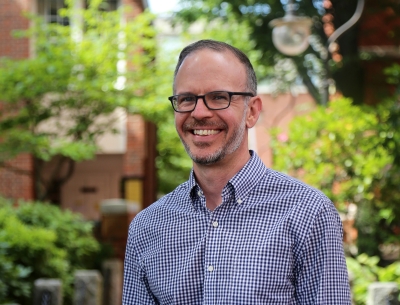
My name is Will Stewart. I came to civic life as a newspaper reporter, first in my native South and then in my adopted New England, where I put down roots and decided I wanted to do more than shine a light on the problems I was covering. I went into the work directly. Community organizing led to building an organization myself, then to leading a chamber of commerce and being elected to local office. Eventually I became executive director of a statewide civic leadership program that brings people from vastly different backgrounds into sustained contact and asks them to practice the habits self-government requires.
From each of those positions the view was different. The conclusion was the same. The informal agreements that once made democratic governance workable were quietly losing their hold, the structures that once organized cooperation were weakening, and the habits civic life requires were becoming less practiced, not because people stopped caring, but because the institutions that once developed those habits no longer did so as consistently as they once did.
That is the diagnosis this platform starts from. What follows is the work of doing something about it.